

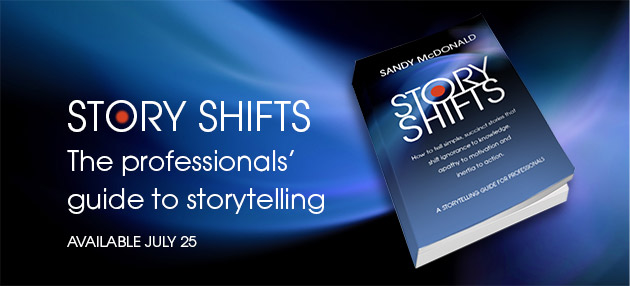
Story Shifts—the professionals’ guide to storytelling
Turning your storytelling into relevant, compelling and memorable communication.
Story Shifts is a practical and implementable guide to storytelling as a game changer in how professionals can communicate.
In an age where attention is the rarest commodity, we have to find new ways to attract and retain it, and even more importantly, inspire recall. How do you get your messages across to the people you most want to reach, and make sure they recall them?
Storytelling is how we’ve done it for millennia. For a while now, it’s been enjoying a major resurgence as businesses, organisations, and individuals realise its power to get cut through, where normal communications fail. The question then, is how well do you tell stories?
This guide aims to help you develop both the confidence and skills in storytelling to create lasting impressions. Once you understand how to tell stories with the right purpose and intention, you can use this skill across any platform—business, philanthropy, promotions, or personal endeavour.
What else will you learn?
If you follow Story Shifts through and use the activities to practice storytelling, you’ll also learn how:
• to explore and articulate your purpose
• stories excite partnership, and collaboration
• to recognise opportunities for connecting meaningful stories to productive results
• to employ a clear intention for all your communications, written and spoken
• define your unique value and expertise and demonstrate it appropriately
• to research, source and grow a collection of relatable stories
• to use succinct and clear language to support better spoken and written communication
• craft stories that can be used in presentations and keynote addresses
• weave story through any communication to engage, persuade, and influence
• use stories in a compelling pitch.
Together, this will inspire a desire to embed the skill of storytelling lifelong as better communication.
How does Story Shifts, a Guide to Professional Storytelling work?
After two decades of coaching and training professionals, business owners and academics in storytelling, I have pulled all the processes together in this digestible, logical guide.
Each section is illustrated with stories which demonstrate the point being made to show you how a story can call to action and how to simplify your stories using my story arc process.
There are multiple activities throughout the guide which aim to help you practise the art of storytelling in a way that will build your confidence.
When is Story Shifts, the Professionals’Guide to Storytelling available?
The guide will be available for purchase from July 2025. Please contact me here, if you would like to purchase an advance copy.
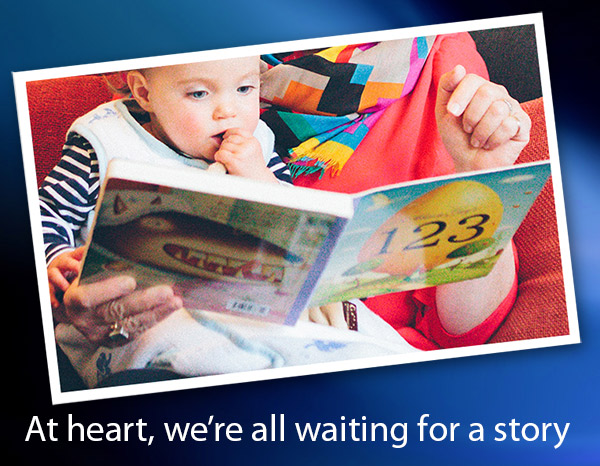
Scratch the surface in any boardroom, and we’re all just cavemen with briefcases hungry for a wise person to tell us stories.’TED Talker & Computer Pioneer, Dr Alan Kay
Story Shifts busts these nine myths about storytelling
MYTH 1: I’m not creative so I won’t be good at storytelling
MYTH 2: Stories might entertain, but do they serve any other purpose?
MYTH 3: Is it ethical to use storytelling to sell?
MYTH 4: Doesn’t storytelling sound like you love the sound of your voice?
MYTH 5: Personal story isn’t relevant
MYTH 6: Isn’t storytelling just a bit warm and fuzzy?
MYTH 7: I don’t have any stories worth telling
MYTH 8: You can’t tell any old story
MYTH 9: Story is not applicable to facts and statistics
A short story example from the book
STORY: 200 reasons
In 2012, I did a business course in Melbourne, in which we were invited to write a book. The co-founder suggested we write 200 reasons for doing so. A diligent student, I complied. It was really hard.
For the next 61 days from 6am to 8am, I wrote, edited, typeset, and prepared my book for print. For those two hours, I was in a state of play and my creative thinking flourished.
How that translated onto the pages of my book I no longer recognize. It was if an alter ego had control of my brain.
Many of the concepts I didn’t know I had, but inform the work I continue to do today. It was worth writing those 200 reasons. Maybe you should try it to do this guide.
This is how the story arc works in this story
BEGINNING
Status Quo—sets context, (time and place): Melbourne, 2012
Spark—ignites the story: 200 reasons
MIDDLE
The journey/quest/challenge: 61 days doing stuff
The surprise/realization/revelation: creative thinking, concepts inform work today
The decision/resolution: worth writing 200 reasons
CONCLUSION
Holds the intention for the story, the call to action/shared value/instruction/reflection or the idea worth sharing.
In this case, a call to action: Write 200 reasons to set your mindset for the work in this storytelling guide.
 Sandy McDonald

 Sandy McDonald